
Crawl Space Encapsulation or Insulation: Which One a House Here Needs
Most homeowners arrive at this question because a floor is cold, a room smells musty, or someone looked under the house and did not like what they saw. The fix depends on which of two jobs the house actually needs, and they are not interchangeable.
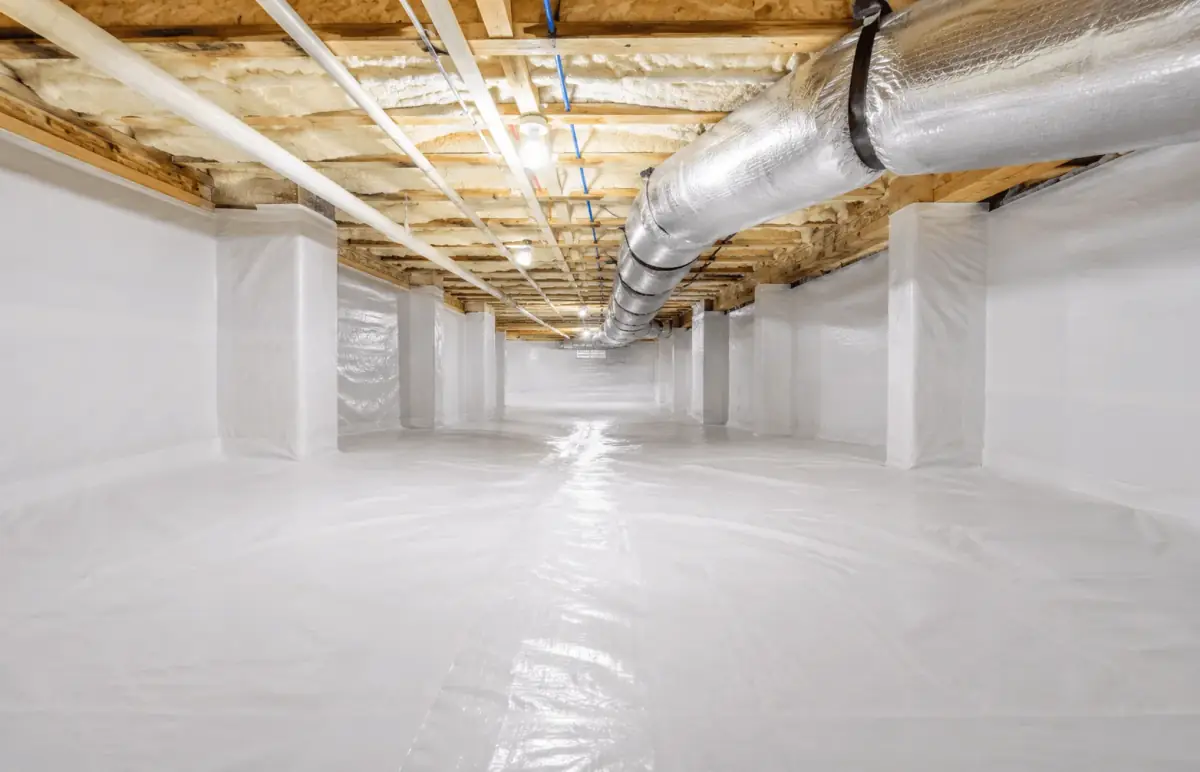
The vents around the base of a house were put there to dry the space behind them. For part of the year in this climate they do the opposite, and that is what decides which of the two jobs a house actually needs.
Quick answer: insulating between the floor joists and encapsulating the whole crawlspace are different jobs. In a humid climate, Building America researchers at the Department of Energy recommend converting the crawlspace to an unvented space and insulating its walls, rather than insulating the floor above a vented one.
The two jobs are not the same thing
Insulating the floor means putting material between the joists under your floorboards, leaving the crawlspace itself outside the house. Air still moves through the vents, the ground is still open, and the insulation is there to slow heat moving between a cold or hot crawlspace and the room above.
Encapsulation treats the crawlspace as part of the house instead. The vents get sealed, a heavy barrier goes across the ground and up the walls, and the insulation moves to the foundation walls rather than the ceiling of the space. The crawlspace is brought inside the building rather than left outside it.
Why the humid climate answer is different
The Department of Energy's Building America program splits this by climate. In a dry or marine climate, it says you can add insulation under the floor. In a humid climate, its researchers recommend converting the crawlspace to an unvented space and insulating the walls instead.
The reason is what the vents do on a humid summer day. A vent is an opening, and it pulls warm, wet air into a cool space, where it condenses on the first cold surface it finds. That is how you get water on ductwork, joists and the underside of a floor.
So on those days the ventilation that is supposed to dry the space is delivering the moisture instead. Insulating the floor above does nothing about that. It slows heat through one surface and leaves the wet space under it exactly as wet.
Nothing gets insulated over standing water
If the crawlspace is actively wet, that comes first. Sealing a wet crawlspace just traps the water inside with a nice barrier over it, and you have paid for a more expensive version of the same problem.
The Department of Energy's own insulation guidance makes the same point about materials: address mold before installing cellulose, and treat accidental wetting and high humidity as a real risk, because cellulose can absorb large quantities of water. Where there is a drainage problem, a plumbing leak, or water coming in at the footing, that is the first job and the insulation waits behind it.
What encapsulation involves
The ground cover is the part that does the most work and gets the least attention. A Department of Energy and Oak Ridge National Laboratory fact sheet puts it plainly: for an unvented crawlspace it is crucial that all of the ground area is covered with a durable vapor retarder, such as heavy weight polyethylene film.
All of the ground area is the operative phrase. A barrier that covers most of the dirt and stops short at the awkward corners is not a barrier, because the exposed soil keeps evaporating moisture into a space you have now closed up. The seams, the edges against the walls, and the piers in the middle are where the job is won or lost.
From there the vents get closed, the walls get insulated rather than the floor, and closed cell foam goes in where moisture is the problem and not just cold. Which of those applies to your house depends on what the space looks like once someone is actually down there.
What it changes about the air upstairs, and what it does not
This is where it helps to be precise, because five different things get called humidity control and they do different jobs.
Insulation slows heat through a surface. Air sealing closes the holes that let unconditioned air in. Ventilation moves air deliberately. Vapor control stops moisture moving through materials and up out of the ground. Dehumidification removes water from air that is already inside. Closing a crawlspace and covering the ground is vapor control and air sealing. It is not dehumidification.
That distinction matters for what you should expect. A sealed, covered crawlspace stops a moisture source feeding the house. It does not pull water out of air that is already in your living room. If a house has an air conditioner that is oversized enough to cool the rooms without running long enough to dry them, sealing the crawlspace will not fix that.
How to tell which one you are looking at
You can usually work out which job a house needs from the hatch, without going all the way in.
- Open vents around the perimeter and bare dirt underneath means the space is currently outside the house.
- Insulation between the joists overhead, especially if it is sagging or dark in patches, means someone has already tried the floor route.
- A plastic sheet that covers part of the ground and stops is a partial job, not an encapsulated space.
- Condensation or rust on ductwork and metal strapping in summer is the moisture signal, not a cosmetic one.
- Standing water, or soil that is damp when it has not rained for a week, moves drainage ahead of insulation.
If what you see is open vents, bare ground and sagging material overhead, the question of which job the house needs has usually already answered itself.
What we look at before putting a number on it
The size of the space and how much headroom there is to work in. Whether the plan is insulating the floor or encapsulating the whole space. How much barrier and sealing the ground and walls actually call for. Whether closed cell foam is warranted, and only where it is. Whether ruined material has to come out and be hauled away first.
The number comes after someone has been down there and seen it. Once we get started, you get one number for the whole project with everything in it. If you want that looked at, the free estimate is the fastest way to get someone under the house, and our crawlspace insulation and encapsulation page covers the services themselves.
Crawlspace Encapsulation FAQs
Is encapsulation better than insulating the floor?
For a humid climate, the Department of Energy's Building America guidance points that way: it recommends converting the crawlspace to an unvented space and insulating the walls, and reserves under floor insulation for dry and marine climates. It is not a universal rule, though. A space that is already dry, already sealed, and only has a cold floor problem is a different case from a vented crawlspace with bare ground under it.
Do I need a vapor barrier if I insulate the floor instead?
Covering the ground helps either way, because bare soil keeps releasing moisture regardless of where the insulation sits. The Department of Energy and Oak Ridge National Laboratory fact sheet treats full ground coverage as crucial specifically for an unvented crawlspace.
What happens if you insulate a wet crawlspace?
You get a more expensive version of the problem you started with. The water is still there, it is now harder to see, and insulation that gets wet stops performing. The Department of Energy's insulation guidance says to address mold before installing cellulose and warns that cellulose can absorb large quantities of water. Drainage comes first, then insulation.
Will sealing the crawlspace fix humidity in the house?
It removes a moisture source, which in this climate is usually a significant one under the floor. It does not dehumidify. Sealing and covering is vapor control and air sealing, and those are different from pulling water out of air that is already inside. If the house has a separate moisture source or a cooling system that does not run long enough to dry the air, that stays on the list.
Can the vents just be closed without doing anything else?
Closing vents without covering the ground removes the air exchange while leaving the moisture source in place, which is the worst of both arrangements. The ground cover and the sealing are one job rather than two options.
Not Sure Which Way to Go?
That's a reasonable place to land, and it's the question we answer for free. Send the form or call, and we'll come look at the framing and the attic before recommending anything. No obligation.
- A straight answer on which material fits, including when it's the cheap one
- We install both materials, so we have no reason to push either
- Licensed, insured & BBB A+ accredited
- Family owned in Wewahitchka, working residential homes since 1994
Request Your Free Estimate
Give us the basics on your home and we'll get in touch.