
Blown-In Insulation in Northwest Florida
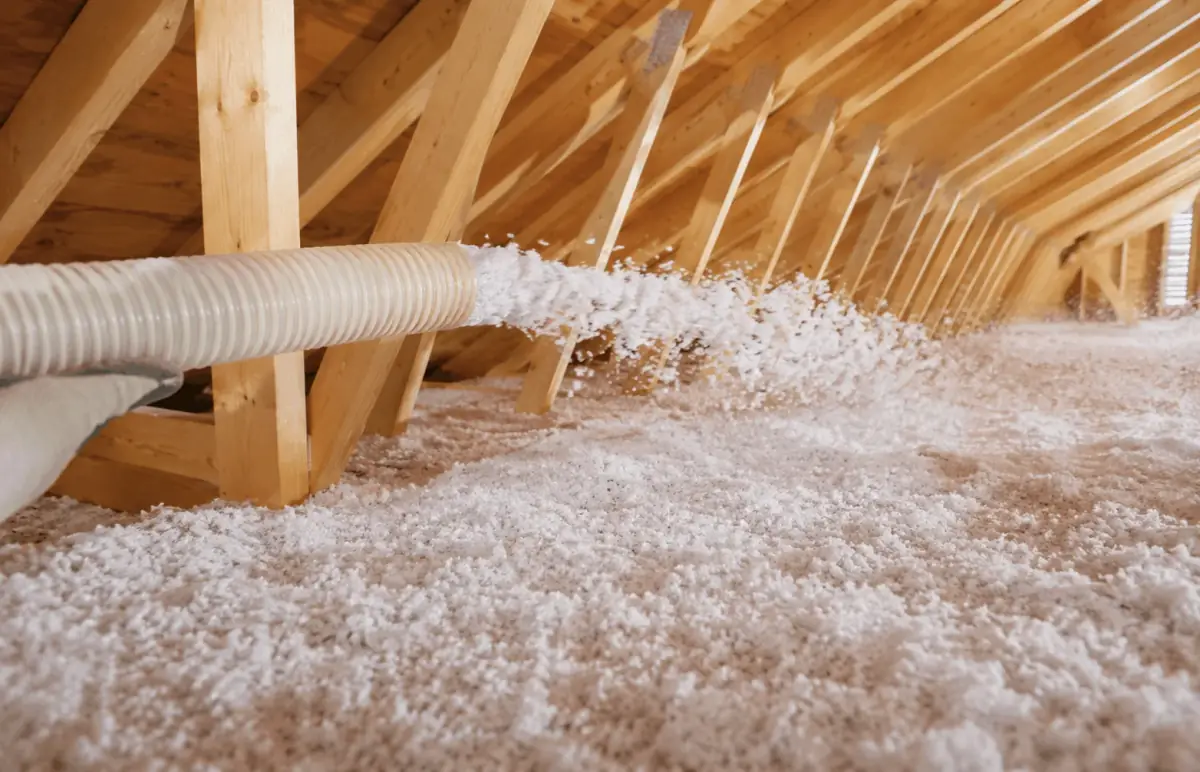
Loose fiberglass or cellulose, fed through a hose until the attic floor is back to the depth it should have had all along. Plain work, and the work we get asked for most.
How Loose Fill Gets Where It Needs to Go
Blown-in insulation is loose material, fiberglass or cellulose, fed through a hose and blown into place instead of cut and fitted like a batt. That difference is the whole point. Loose fill lands around wiring, over the tops of joists, into the shallow triangle where the roof meets the wall plate, and into every awkward corner a rectangular batt would have to be trimmed around. At R-3.2 to R-3.8 per inch it is not the strongest material we install. It is usually the most practical one.
Attics take most of it. It also works in closed walls, where we dense-pack the cavity through small holes and patch behind ourselves, so an older house can get wall insulation without the drywall coming off.
Who ends up needing it
Mostly people whose attic used to be fine. Loose fill compresses under its own weight across the decades, gets flattened by anyone who crawls up to run a cable, and drifts away from the edges. A house insulated to the standard of 1985 has likely lost inches since then, and nobody notices because nobody goes up there. Bringing it back to depth is a smaller job than most homeowners expect.
Even Coverage Beats Extra Material
Heat behaves like water running downhill. It finds the low point. A gap around a recessed light or a bare patch in a far corner pulls far more heat than its size suggests, and it quietly undoes the R-value you paid for everywhere else. That is the case for loose fill in a Florida attic: it goes down as one continuous layer with nothing to seam or trim. We blow to a measured depth and mark it as we work, because an attic that averages R-38 with thin spots does not perform like an attic that is R-38 all the way across.
Where Loose Fill Earns Its Keep
Nothing to seam
It settles around framing and wiring and into the corners a batt would have to be cut around.
One visit, most attics
Getting back to full depth is usually a single trip with the hose, and not much of an imposition on your day.
The value option
Inch for inch, the least expensive way to put real R-value back into an attic that has gone thin.
Goes into closed walls
Dense-packed through small holes, so an older wall gets insulated with the drywall left where it is.
Inches, Not Guesswork
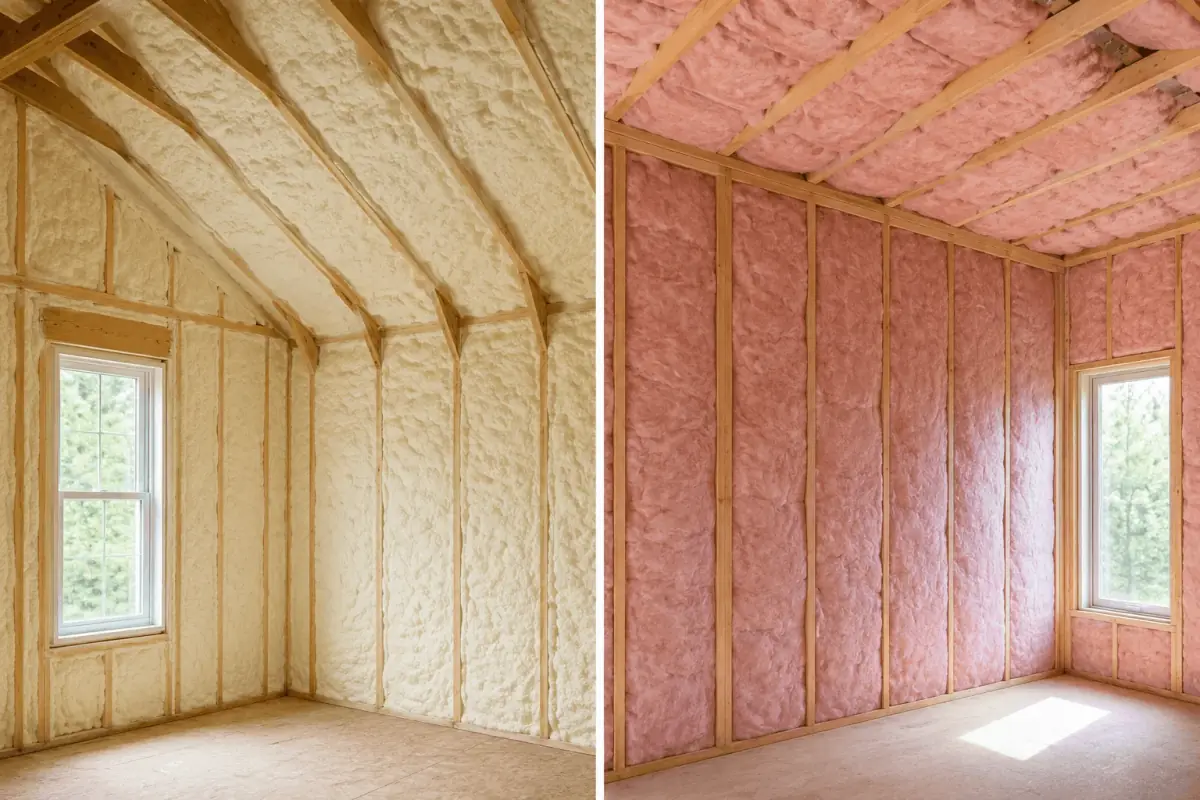
Blown-in delivers R-3.2 to R-3.8 per inch depending on the material, which is how a target R-value turns into a depth. Getting a Florida attic into the R-30 to R-49 the U.S. Department of Energy recommends therefore means a layer sitting well above the joists, deeper than most people picture when they first look through the hatch. Fiberglass and cellulose both get you there. Cellulose is denser and packs tighter, loose-fill fiberglass is lighter. Which one we suggest comes down to your attic, what is already in it, and what you want out of it, and you will hear the reasoning before there is a price attached.
Attics That Are Ready for More
Some of this you can check yourself with a flashlight and a look through the hatch:
- A layer that has settled below the tops of the joists
- Low clearance or an odd layout that batts never fit properly
- Bare patches where someone worked and pushed the material aside
- Walls in an older house you would like insulated without a remodel
Two caveats worth hearing. Loose fill does not stop air, so if the attic floor is full of unsealed gaps around lights and top plates, blowing material over the top of them buys you less than it should. That is why we seal first. And if the reason your house is hot is a duct leaking into the attic or an AC on its last summer, no amount of insulation rescues it. Better to find that on the inspection than on the bill.
What Actually Happens Up There
Simple work, done in an order that matters. The gaps in the attic floor get sealed first. Baffles go in wherever insulation could otherwise block a soffit vent. Then the hose comes up and the material goes down, worked from the far end back toward the hatch so nobody walks across finished insulation, to a depth we mark and check as we move. Walls run differently: small access holes, dense-pack through them, patch cleanly. Either way, most homes are finished in one visit, and the equipment stays out of your living space.

A Look and a Measure
Depth check through the hatch, a look at the ventilation and ducts, and a conversation about which rooms are the problem.
The Number
Material, target depth, and price in writing. Ask us about any part of it before you decide.
Seal, Then Blow
Gaps closed, baffles set, then loose fill to the marked depth, working from the far corner back.
Done in a Day
We check depth in several places, clear the equipment out, and tell you exactly what went in.
What Moves the Number
Blown-in is priced on what it takes to reach the depth your attic is missing. That comes down to:
- Attic or wall square footage, and how many inches you are short
- Loose-fill fiberglass or cellulose
- Whether we build on what is there or clear it out first
- Access points, baffling, and whatever prep the space needs
- How much sealing the attic floor wants before the blow
Every attic is its own number, so we look before we quote. Ask for a written estimate, or read our guide to insulation costs in Florida if you want a feel for the ranges first.

Attics We Top Up Around the Region
We bring the hose to homes across the Florida Panhandle, South Alabama, and South Georgia. A few of the cities we cover:
The Materials Next to It
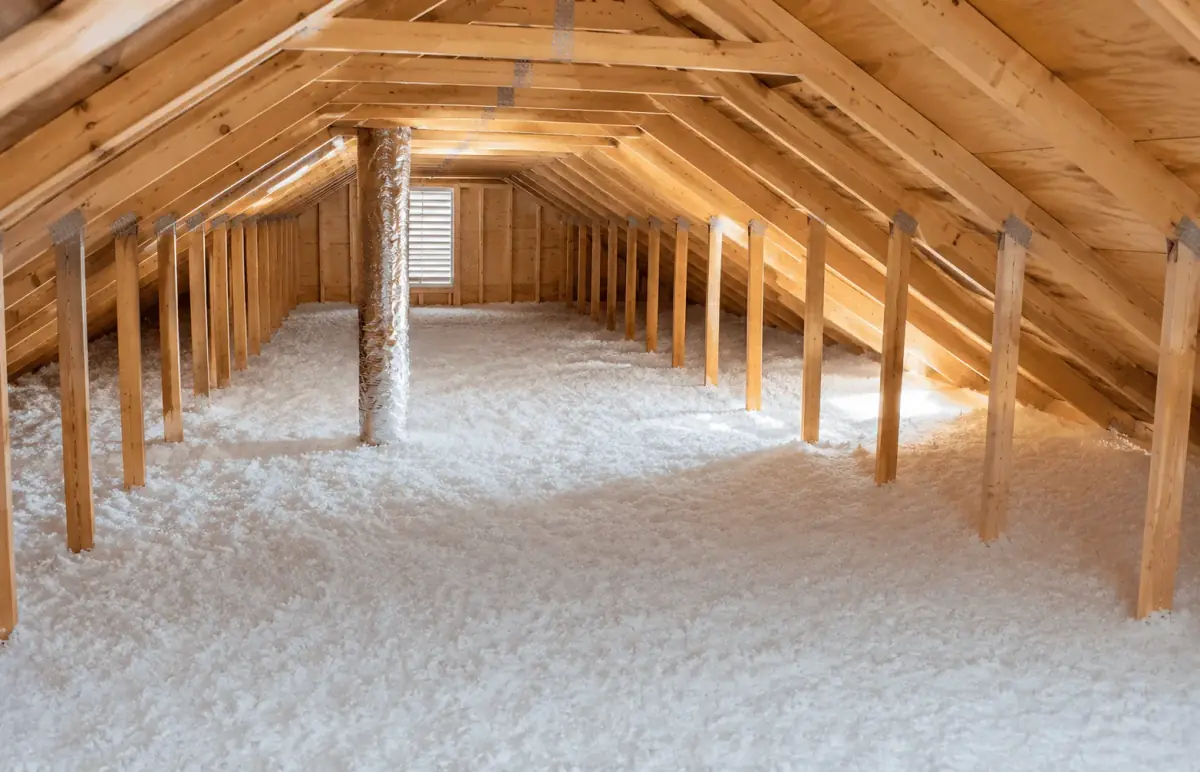
Attic Insulation
The wider picture for a hot house, and where nearly all of our blown-in ends up going.
Learn more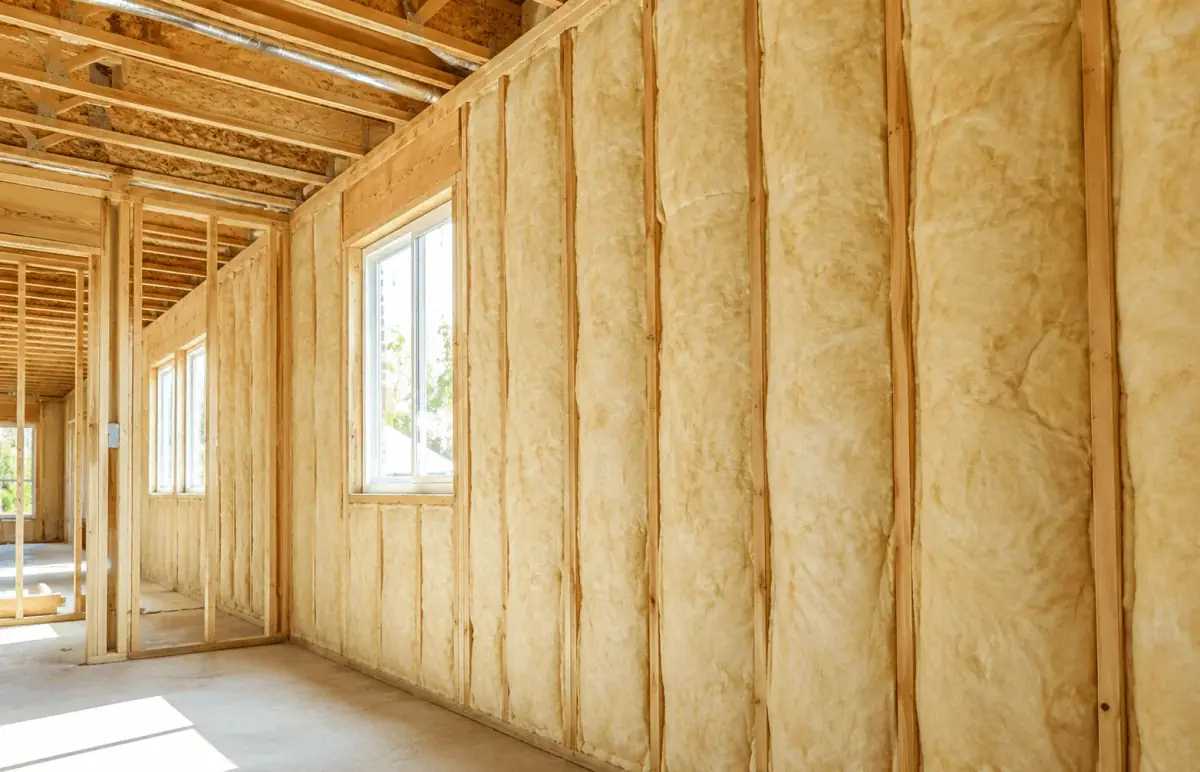
Fiberglass Insulation
The batt version of the same idea, better suited to open walls and floors than to a finished attic.
Learn more
Cellulose Insulation
Denser recycled fiber, blown the same way, with a bit more sound deadening to it.
Learn moreBlown-In Insulation FAQs
Is blown-in insulation better than batts for an attic?
In most attics, yes, and it comes down to coverage. Loose fill flows around framing, wiring, and odd angles, where a batt has to be cut and still leaves a gap wherever the cut was not perfect. Blown-in also moves faster across a big attic and can be taken to any depth. Batts still earn their place in open walls and floors.
Can you add blown-in insulation on top of old insulation?
If what is up there is dry, clean, and pest-free, we blow the new material straight over it and build to the depth you need. If it is wet, matted flat, or fouled, we will recommend clearing it out first, since new insulation laid over bad insulation does not perform and only hides the problem.
How deep should blown-in attic insulation be?
Deeper than most people expect. At R-3.2 to R-3.8 per inch, reaching the R-30 to R-49 range for a Florida attic means a layer sitting well above the joists. There is no single number, since it depends on the material and the target, so we work out the depth for your attic, mark it, and check it as we blow.
Can blown-in insulation be added to walls as well as attics?
It can. Attics are the common use, but existing walls can be dense-packed through small access points that we patch afterward, which spares you a remodel. Whether it suits your house depends on how the wall is built and what is already in the cavity, so it is one of the things we check while we are there.
A Written Number, Itemized
The material, the depth we are blowing to, and the price, on paper before anything gets scheduled. Ask us about any line on it.
See What Your Attic Is Actually Missing
Send the form or call. We will measure the depth you have now, tell you how far short of the target it sits, and put the cost in writing.
- A measured depth, not a guess through the hatch
- Blowing attics across the Panhandle since 1994
- Licensed, insured & BBB A+ accredited
- Family owned, and residential attics and walls only
Ask About a Top-Up
Tell us about your attic and we will follow up to set a time.
Attic Gone Thin?
Most of them have, given enough years. Have us measure yours and tell you what it would take to bring it back.