
Cellulose Insulation in Northwest Florida
Shredded paper fiber, treated and packed dense. It fills the spaces a batt never quite reaches, and it makes a house noticeably quieter.
Paper, Basically
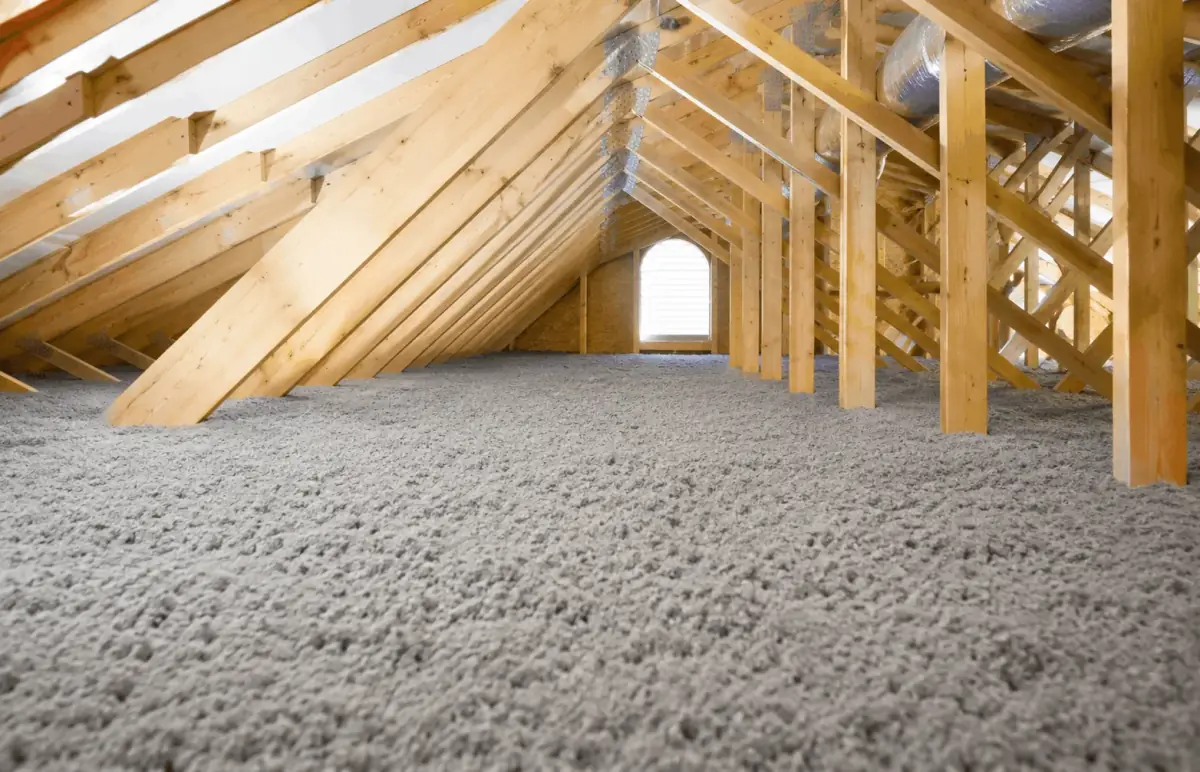
Cellulose insulation is recycled paper, ground into loose fiber and treated with borate. It arrives as compressed bales, goes through a machine that fluffs it, and travels down a hose to wherever it needs to go. Nothing about it is exotic. What sets it apart is density: cellulose is heavier and finer than the alternatives, so it settles into the gaps and odd corners that a rigid batt bridges right over.
That density is also why homes insulated with it get quiet. Sound needs air paths to travel through, and packed fiber closes them. Homeowners rarely ask for cellulose expecting that, and it is usually the first thing they mention afterward.
Two Ways We Install It
In an attic, cellulose is blown loose across the floor, piled to a measured depth over the ceiling below. In a wall, it is a different animal: we drill small holes between the studs and dense-pack the cavity under pressure until the fiber is packed too tightly to shift, then patch the holes. Our guide to insulating the walls of a house that is already built covers the density that decides whether it works. Dense-packing is how existing walls get insulated without tearing out drywall, and it is one of the few honest options for a finished house.
Water Is Cellulose's Weak Point
It is paper. Keep it dry and it lasts decades; let it get wet and it mats down, loses R-value, and does not bounce back the way it went in. So the first thing we assess is not the attic, it is what might get into the attic. A roof with a history of leaks, a bath fan venting into the insulation instead of outside, a crawlspace pushing moist air up through the house: any of those, and we would steer you toward a different material for that area rather than watch good work fail in three years. Cellulose is a genuinely good product in a dry, well-ventilated, air-sealed space. Outside those conditions, it is the wrong pick, and we will say so.
Where Cellulose Earns Its Place
Mostly recycled paper
The raw material was newsprint. If that matters to you, cellulose is the option that delivers it.
It quiets a house
Dense fiber blocks the air paths sound travels through. Interior walls benefit most.
Fills what batts miss
Loose fiber finds its way around wiring, bracing, and irregular framing.
Treated with borate
The treatment is what gives paper fiber its fire resistance and keeps insects uninterested.
Why We Install More Than You Need
Cellulose runs roughly R-3.2 to R-3.8 per inch, and in an attic that per-inch number has to survive one complication: loose fill settles. Blow it to twelve inches today and gravity will have its say over the following months. This is not a defect, it is simply how loose material behaves, and it is entirely predictable, which means it is entirely plannable. We install to an initial depth chosen so that the settled depth still hits the target, which for attics in our climate zone means the U.S. Department of Energy range of R-30 to R-49. A contractor who blows to the finished number and walks away has quietly sold you less than the estimate said. Walls are the exception: dense-packed cellulose is compressed so hard on the way in that there is nowhere left for it to settle to. The loose dry cellulose going into an attic is recycled paper treated with borate, blown to a settled depth chosen for your target R-value, and the arithmetic behind that depth is laid out in our guide to how to calculate cellulose insulation.
Dry vs. Dense-Pack, Settling, Coverage, and Dust
Cellulose insulation material is recycled paper fiber treated with borate, and it goes in two ways. Loose dry cellulose insulation is blown across an attic floor, while high density cellulose insulation, often called dense-pack, is driven into wall cavities under pressure. The dense pack cellulose insulation R-value works out to roughly R-3.2 to R-3.8 per inch, the same per-inch range as the loose fill, but packing it firmly is what keeps it from shifting once it is inside a wall.
Two questions come up constantly. How much does cellulose insulation settle? Loose attic fiber drops a predictable amount over the first months, so we blow extra depth up front to land on your target once it has settled. And what about cellulose insulation dust in the house? The blowing does throw dust, so we mask the work area and clean up, and once the fiber sits behind a sealed ceiling it stays put. Our post on cellulose insulation dust in the house covers what to expect.
Cellulose insulation coverage is not a single number either. How many bags your attic takes depends on its square footage, the depth you are building to, and the R-value goal for this climate zone, which is why professional installation matters more than it looks. For the math behind the bags, read cellulose insulation coverage and settling.
Reasons Homeowners Call Us About It
Cellulose tends to come up for one of a handful of reasons. See if any of these is yours:
- You want a recycled material and you want to know where it came from
- You can hear the TV, or a teenager, through a wall you wish were quieter
- Your walls have never been insulated and you are not gutting the house to fix it
- Someone insulated the attic years ago and it has flattened into a thin, tired layer
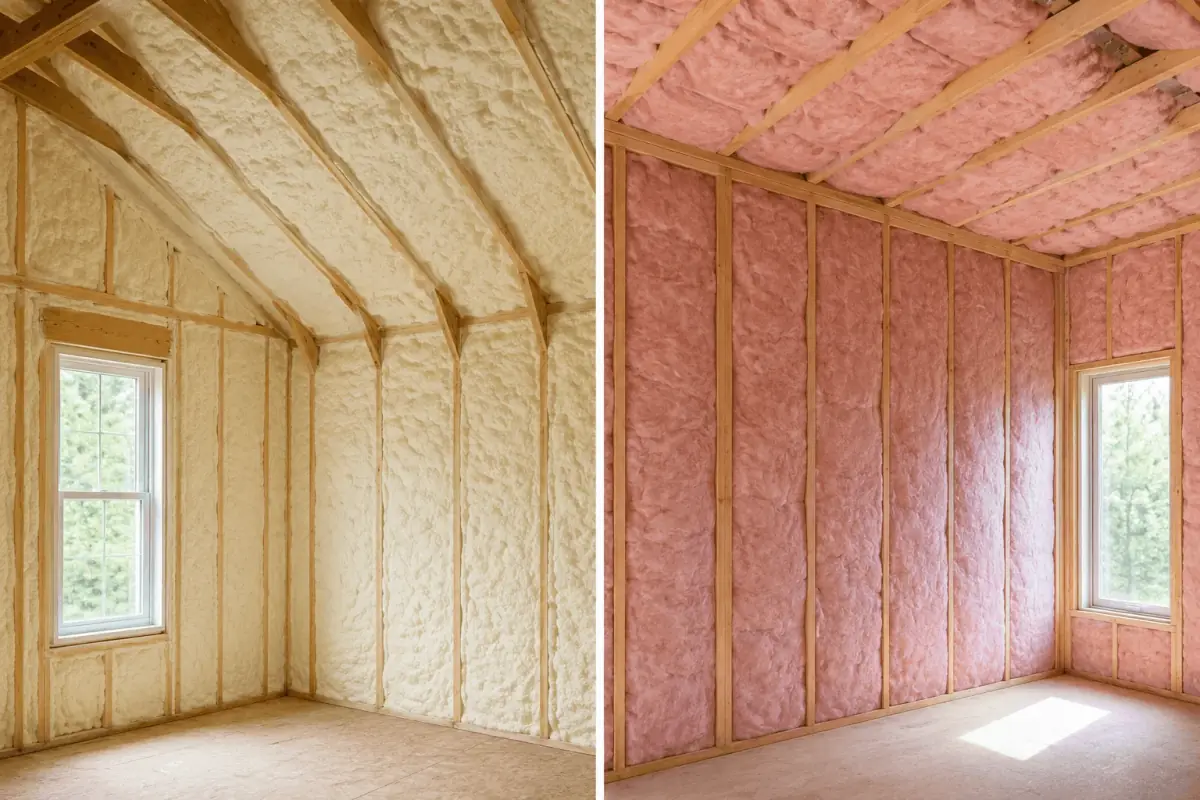
Choosing between cellulose, fiberglass, and foam is not really a decision you can make from a website, ours included. It turns on the depth of your framing, the condition of your roof, how the attic breathes, and where the moisture is coming from. That is a half hour in your attic, not a phone call, which is why we look before we recommend.
What Actually Happens
The blowing itself is the quick part. Most of the day goes into what comes before it. In an attic, that means sealing the penetrations in the ceiling below (can lights, top plates, the chase around the flue) and setting baffles at the eaves so the soffit vents stay clear once fiber is piled around them. Skip the baffles and you have just blocked the attic's ability to breathe, which is how you turn a good material into a moisture problem. Then the hose comes in, the fiber goes down to a marked depth, and we check the depth with a ruler rather than an eyeball. Walls are messier: holes drilled, cavities packed to refusal, holes plugged. Cellulose does throw dust, so we mask off the work area and clean up behind us. You will want to plan for the machine noise outside, and keep pets somewhere else for the day.

Check for moisture first
Before anything else we find out whether this attic or wall stays dry. That answer decides the material.
Agree the settled depth
The estimate names the depth going in and the R-value once it settles, so there is no ambiguity later.
Seal and baffle
Ceiling penetrations closed, eave vents protected. This is the part that keeps the fiber working.
Blow, measure, clean up
Depth verified with a ruler across the whole area, then the dust and bales leave with us.
Where the Cost Comes From
Cellulose is priced by how much material goes in and how much work it takes to get it there. Those two things vary more between houses than people expect. What we weigh:
- The area to cover, and the depth your R-value target actually requires
- Loose fill in an attic is straightforward; dense-packing walls is slower work
- Whether the old material can stay or has to be vacuumed out first
- How we get a hose in there, and how far it has to reach
- The sealing and baffle work the attic needs before a bale is opened
The only way to get a number that means anything is to have someone look. Ask for a written estimate and there is no obligation on the other side of it. Curious about ballpark figures generally? Our guide to insulation costs in Florida lays out the territory.

Cellulose Insulation Across Our Service Area
Our hose reaches attics and walls throughout the Panhandle, South Alabama, and South Georgia. Some of where we go:
Worth Considering Together
Blown-In Insulation
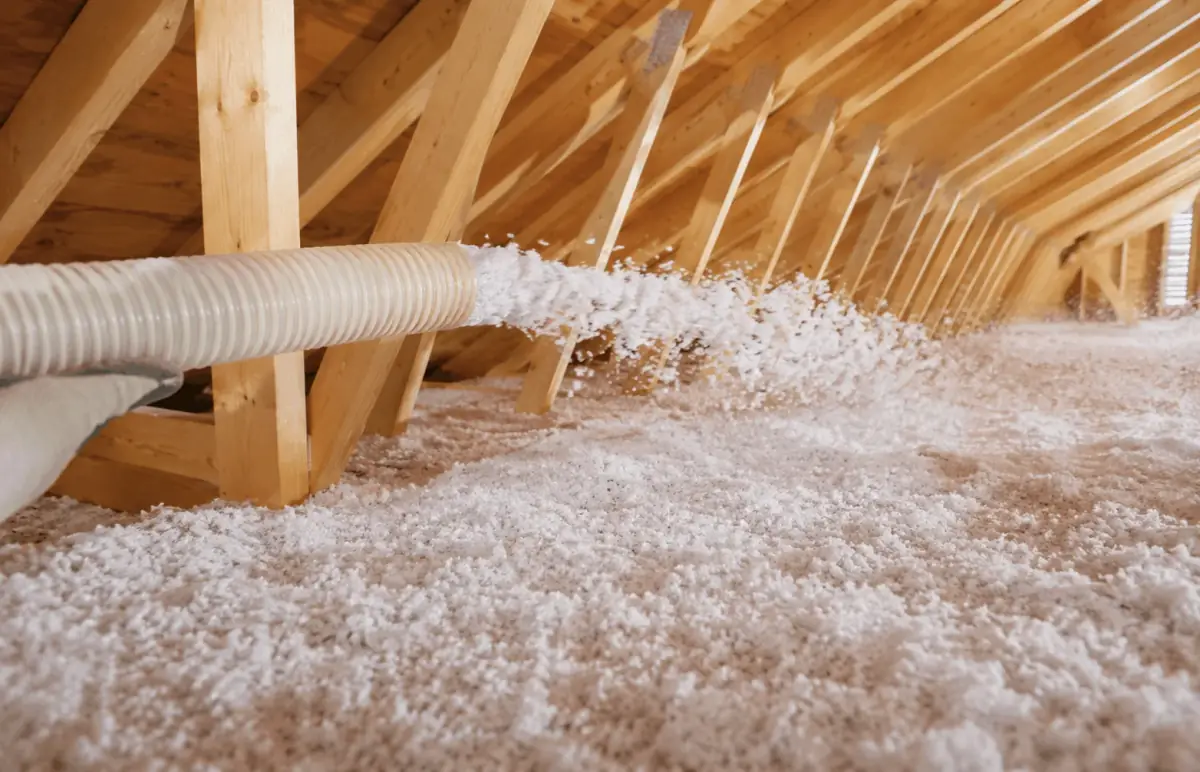
The same method with fiberglass loose fill instead of paper. Worth comparing if damp is a worry.
Learn more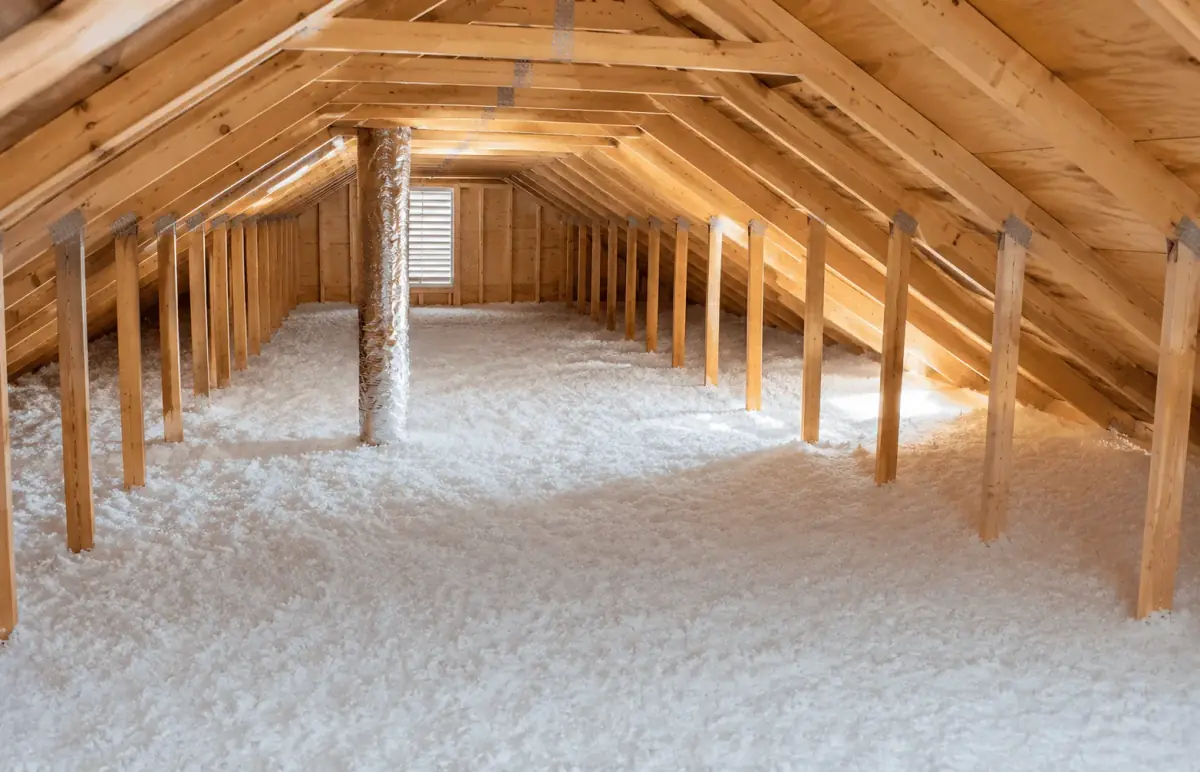
Attic Insulation
Most cellulose we install ends up here. The overview of what an attic upgrade involves.
Learn more
Fiberglass Insulation
Batts for open framing. The alternative when the walls are already coming apart anyway.
Learn moreWhat Homeowners Ask Us
Is cellulose insulation a good choice in Florida?
It can be, with a condition attached. Cellulose does well here when the space stays dry, the attic is ventilated properly, and the ceiling below has been air-sealed. Get those right and its density gives you coverage and quiet that other materials struggle to match. Get them wrong and you have paper absorbing humidity, which helps nobody. So the question is really about your house rather than the product, and it is why we look at the roof, the vents, and any moisture history before recommending it. Where the risk is there, we will point you to fiberglass or foam instead and explain the reasoning.
Paper in my attic, though. Is that really safe?
It is a fair thing to ask, and the answer is the borate. Cellulose is not raw newspaper; the fiber is treated before it ever reaches your house, and that treatment is what makes it fire-resistant while also making it unappealing to insects. This is not a new or experimental material either. It has been going into American homes for decades, under the same building codes and fire testing as everything else we install.
Does cellulose insulation settle over time?
Yes, and anyone who tells you otherwise is selling something. Every loose-fill material settles to some degree; cellulose is simply honest about it. The fix is arithmetic, not magic. We blow to an initial depth calculated so that once it has settled, the remaining depth still delivers the R-value on your estimate. In walls it is a non-issue, because dense-packing compresses the fiber so firmly that there is no room left for it to drop.
Can you dense-pack my walls without tearing out drywall?
Usually, yes, and that is much of the appeal. We drill a small hole into each stud bay, feed the hose in, and pack the cavity until it will not take any more, then plug and patch the holes. You are left with patches to paint rather than a room full of demolition. Two honest caveats. We have to be able to reach the wall from one side or the other, so siding, brick, or tile can complicate it. And if a cavity turns out to be blocked by framing partway up, it becomes two cavities and two holes. We find that out by drilling, not by guessing, which is another reason the estimate follows a site visit.
Your Estimate Names the Settled R-Value
Not the depth going in, the R-value you are left with. That is the number that matters, it is the number on your quote, and it is the one you should ask every contractor to put in writing.
Find Out Whether Cellulose Suits Your House
Some homes are a natural fit for it and some are not, and the difference is worth knowing before you commit. Send the form or give us a call, and we will arrange a time to come look.
- Settled depth and R-value spelled out on the quote
- Three decades of attics in the Panhandle, Wiregrass, and South Georgia
- Licensed, insured, and BBB A+ accredited
- A straight answer if your attic is too damp for it
Ask Us About Cellulose
Send this over and we will get back to you to talk it through.
Still Weighing Your Options?
That is the right instinct. Talk it through with someone who has been insulating homes around here since 1994, and who will tell you when a different material is the better answer.