
How Much Does Insulation Cost in Florida?
What actually decides the price of an insulation job on a Florida home, why the honest range is wide, and how to read the estimate you get.
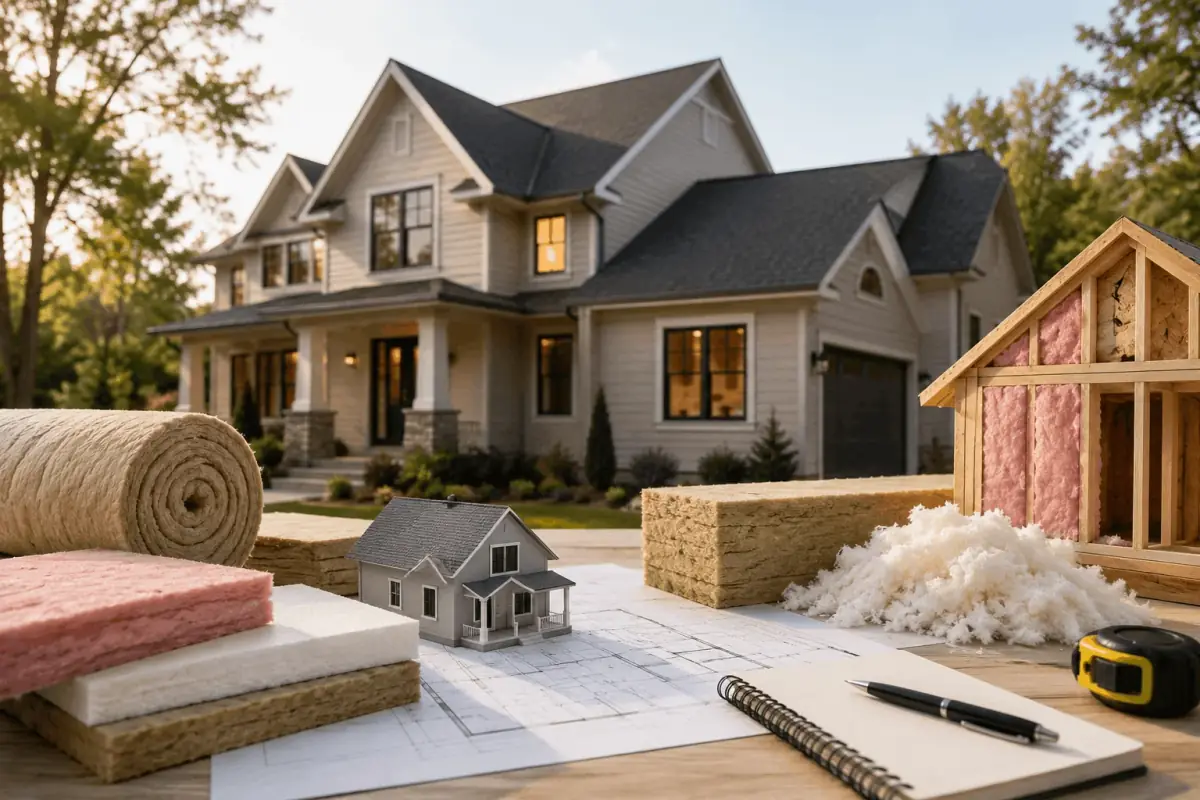
Nobody wants to call a contractor just to find out if a job is in the ballpark. The trouble is that two houses on the same street, built the same year, can price out very differently once you're up in the attic. This page explains what goes into insulation cost in Florida, so the number you eventually get in writing makes sense instead of feeling arbitrary.
Quick answer: Insulation is priced off your home's size, the material, the R-value you're aiming for, how hard the space is to work in, whether the old material has to come out, and how much air sealing goes with it. Change any one of those and the number moves. That's why we won't quote a figure over the phone, and why you should be skeptical of anyone who will.
What You're Actually Paying For
An insulation estimate is not a single price with a markup on it. Whether you are weighing attic insulation cost in Florida or a spray foam job, it's a stack of separate decisions, and each one has a cost attached. Here's how the pieces relate.
| Project Type | Relative Cost | What Drives It |
|---|---|---|
| Attic top-up (blown-in) | Lower | Only works if what's already up there is dry and clean |
| Full attic insulation | Moderate | Square footage, plus the depth needed to reach R-38 to R-49 |
| Fiberglass batts (walls/floors) | Lower to Moderate | Cheap in open framing, awkward and slow once drywall is up |
| Spray foam (per area) | Higher | Material cost, and the prep and masking the job requires |
| Crawlspace insulation/encapsulation | Moderate to Higher | Headroom, standing water, and how much vapor barrier is needed |
| Insulation removal | Add-on | Bagging and hauling old material, priced on top of the new work |
Relative cost, not dollars, and that's deliberate. A figure published on a web page can't know your attic, so it would only be a guess dressed up as information. The number worth having is the one someone writes down after climbing up there.
The Six Things That Move the Price
- How much area there is. The obvious one, though not as simple as it sounds. A big open attic is often cheaper per square foot to do than a small one chopped up by dormers and knee walls.
- Which material goes in. Blown-in and fiberglass sit at the affordable end, which keeps blown-in insulation cost in Florida among the lowest. Spray foam insulation cost in Florida runs considerably higher per square foot because it does more, not because it carries a fatter markup.
- The R-value you're aiming for. Higher R means more depth, or more inches of foam, and the cost follows. Attic targets in our region generally land somewhere between R-30 and R-49. Pushing well past what the code asks for is usually money better spent elsewhere in the house.
- Whether the attic fights you. Low pitch, a maze of ductwork, no catwalk, a hatch you can barely get a bag through. Every obstruction is labor, and on a retrofit labor is most of the bill.
- Whether the old material has to come out. Removal is its own job (bagging, hauling, cleaning the deck), and it isn't optional once insulation is soaked, rodent-fouled, or smoke-damaged. Expect it as a separate line, not a rounding error.
- How much air sealing is in the scope. Sealing top plates, can lights, chases, and the attic hatch takes hours. A suspiciously cheap bid is often a bid with none of that in it.
Reading an Estimate, and the Mistakes to Skip
A written estimate should name the material, the target R-value with the installed depth in inches, the square footage covered, whether removal and disposal are in or out, exactly what air sealing is included, and what's excluded. One line and one number gives you nothing to compare against the next bid and no way to tell afterward whether you got what you paid for.
Three mistakes cost homeowners real money here. Buying on price per inch alone quietly rewards whoever installs the least material, when depth and R-value are the thing you're actually purchasing. Cutting air sealing to trim the quote leaves 130-degree attic air pouring through the gaps and undercuts the insulation sitting right above it. And blowing fresh material over insulation that's wet or contaminated buries the problem rather than fixing it, which means paying for the same square footage twice. Attic insulation paired with air sealing typically reduces HVAC costs by 15 to 20%, and that only holds if both halves actually get done.
The only way to a number you can trust is to have someone in the attic with a tape and a flashlight. Request a free written estimate or call (850) 639-9272, Monday through Friday, 7:30 AM to 3:30 PM. We work with homeowners across Northwest Florida, South Alabama, and South Georgia.
Insulation Cost FAQs
Why won't you quote attic insulation over the phone?
Because the three biggest variables are things we can't see from the road: attic square footage, the R-value you're starting from and aiming for, and whether the existing material has to be removed first. Access matters too. A low-pitch attic packed with ductwork takes far longer than an open one of the same size. A phone number would be a guess, and you'd end up renegotiating it later anyway.
Is spray foam worth the higher cost?
Sometimes, and we'll tell you when it isn't. Foam costs meaningfully more per square foot than fiberglass or blown-in. What you get for it is insulation and air sealing in one pass, plus moisture resistance from closed-cell, and more R in less depth. That's worth paying for in a tight crawlspace, at a rim joist, or in a sealed attic where humidity is the actual problem. In a vented attic with room to spare and no moisture issue, blown-in to the same R-value costs less and performs fine. Higher price is not automatically the better buy.
Does new insulation pay for itself?
Attic insulation and air sealing typically reduce HVAC costs by 15 to 20% in a climate with a cooling season as long as ours. How fast that adds up to the cost of the work depends on your bills, your system, and how bad the attic was to begin with, so we won't put a payback date on it. The comfort change is not gradual, though. Rooms that used to run hot in the afternoon stop doing it.
What should a written insulation estimate itemize?
At minimum: the material, the target R-value along with the installed depth in inches, the square footage being covered, whether removal and disposal are included or billed on top, the specific air sealing work in scope, and anything explicitly excluded. Those details are what let you compare two bids honestly, since the cheaper one is often cheaper because it covers less. Polar Insulation gives free, no-obligation written estimates. Call (850) 639-9272 or request one online.
Get a Real Number for Your Home
Everything above is background. The price for your house comes from measuring your attic. Send the form or call, and we'll set a time to come look and put it in writing, with no obligation to go ahead.
- Material, R-value, depth, and square footage spelled out in writing
- Three decades of Northwest Florida attics, family owned since 1994
- Licensed, insured & BBB A+ accredited
- If the attic doesn't need work, we'll say so
Request Your Free Estimate
Tell us about the house and we'll reach out to schedule.