
How Much Insulation Do I Need in Florida?
A plain-language look at the R-value a Florida attic should hit, how deep that really is, and why humidity and old insulation change the answer for your house.
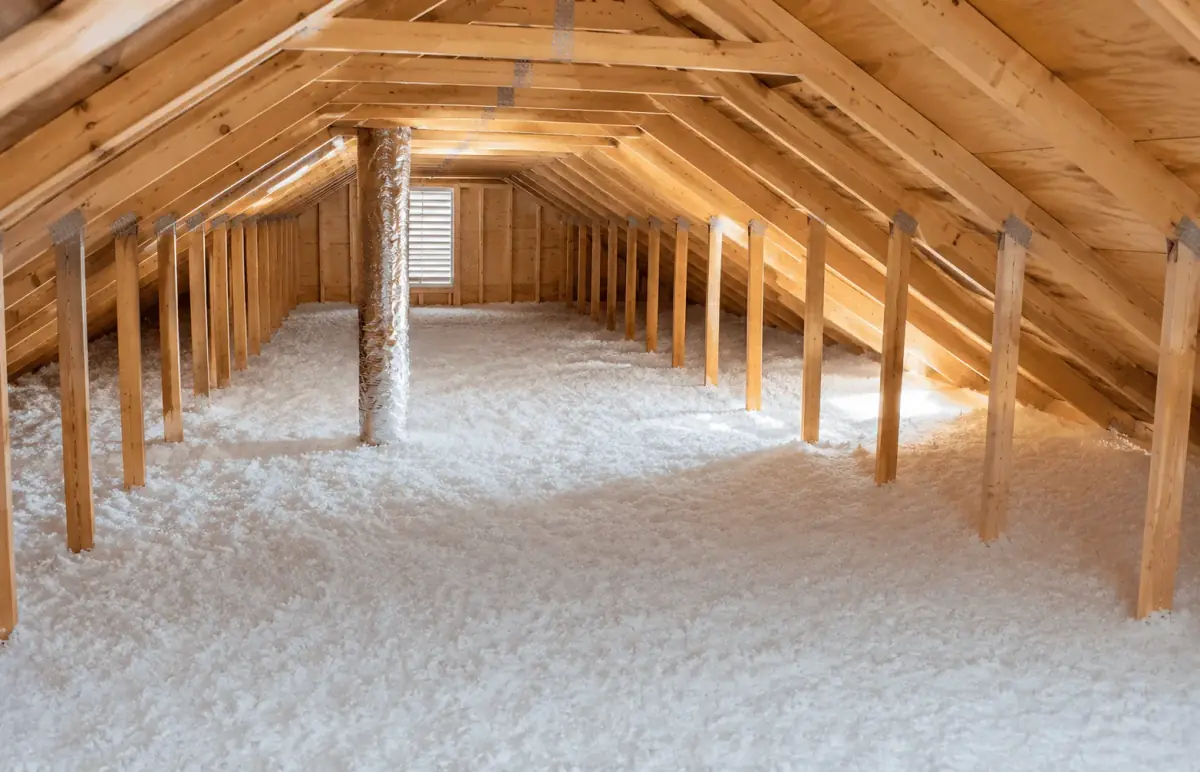
Sizing attic insulation in Florida is a fair question with a slightly annoying answer: it depends on your attic. Still, there is a real range to work inside, and knowing it helps you tell a sensible plan from an oversell. This page walks through the R-value Florida homes generally aim for, how many inches that turns into, and the two things (humidity and whatever is already up there) that decide where your house lands.
Quick answer: Most Florida attics are targeted at R-30 to R-49, the range the U.S. Department of Energy recommends for this climate zone. Where you land inside that band depends on what is already installed, how the attic is built, and how your energy bills are behaving. The goal is an R-value, not a number of inches, since the depth that reaches it changes with the material.
What R-Value Florida Attic Insulation Aims For
For a Florida home in the Panhandle, the attic is where insulation earns its keep. Our long cooling season pushes heat down from the roof for the better part of the year, so the ceiling is the priority. The attic insulation R-value recommended here runs from R-30 at the low end to R-49 at the upper end. A home already sitting near the top of that range rarely needs more. A home with a thin, patchy layer has the most to gain, and usually gains it fast.
How Deep That Actually Is
R-value measures resistance to heat, and every material delivers a different amount per inch. That is why depth alone tells you little until you know what the material is.
| Material | R per inch (approx.) | Rough depth for R-38 |
|---|---|---|
| Blown-in fiberglass | R-3.2 to R-3.8 | About 10 to 12 inches |
| Fiberglass batts | R-3.0 to R-4.3 | About 9 to 12 inches |
| Spray foam | R-6.0 to R-7.0 | About 5 to 6 inches |
These are general ranges, not a spec for your home. The point is simple: two attics finished to the same R-value can hold very different amounts of material, so judge the job by R-value and installed depth together, never by inches on their own.
Why Humidity and the Long Cooling Season Matter
For attic insulation, Florida's climate sets the rules. Florida is not a cold-climate problem in reverse. Heat and moisture both move through a home here, and insulation only handles the heat side. Air that leaks between a humid attic and your conditioned rooms carries moisture with it, which is why air sealing belongs in the same conversation as R-value. Reaching the recommended number and then sealing the top plates, can lights, and the attic hatch is what keeps rooms comfortable. Insulation alone, blown over gaps that are still open, leaves part of the job undone.
When Old Insulation Should Be Inspected First
Adding depth on top of an existing layer is one of the better values a Florida home can get, but only when that layer is dry, clean, and even. Insulation that is matted, water-stained, rodent-fouled, or hiding leaks should be looked at before anything new goes over it. Sometimes a straightforward top-up is all a house needs. Sometimes removal has to come first so the new material actually performs. That is not a call to make from the floor below, which is exactly why an inspection matters.
The best attic insulation for a Florida home is the layer sized to your house, not the thickest one on the shelf. Where the work lands depends on your home. A whole-home plan might touch the attic, walls, and crawlspace, while many houses just need the attic brought up to standard. You can read more about attic insulation and how it fits into a whole-home residential insulation plan on our service pages.
The honest way to size your attic is to have someone measure it. Request a free written estimate or call (850) 639-9272, Monday through Friday, 7:30 AM to 3:30 PM. We work with homeowners across Northwest Florida, South Alabama, and South Georgia.
Florida Attic Insulation FAQs
How much attic insulation do Florida homes need?
Most attics in our region are aimed at somewhere between R-30 and R-49, which is the range the U.S. Department of Energy recommends for this climate zone. Where your home lands inside that band depends on what is already up there, how the attic is built, and how your bills are running. R-value, not inches, is the target. The depth needed to reach it changes with the material, so two attics at the same R-value can look very different once you climb up.
Can I just add more insulation on top of what is already there?
Often yes, and it is one of the cheaper improvements a Florida home can get, but only when the existing layer is dry, clean, and evenly spread. Topping up over insulation that is wet, matted, rodent-fouled, or hiding air leaks buries the problem instead of fixing it, so you pay to cover the same square footage twice. That is why the old material should be inspected before anyone blows new insulation over it. Sometimes a top-up is all you need. Sometimes removal comes first.
Does more insulation always mean lower power bills?
Up to a point. Getting a thin or uneven attic up to the recommended R-value makes a real difference in a climate with a cooling season as long as ours, and attic work paired with air sealing typically trims HVAC costs by 15 to 20%. Piling depth far beyond what the code asks for gives you less and less back for each added inch. Past a sensible target, the money usually does more good on air sealing, duct leaks, or a humidity problem than on extra insulation.
What are the attic insulation requirements for a Florida home?
The U.S. Department of Energy recommends about R-30 to R-49 for attic insulation in a warm climate like Florida, and building codes set a minimum for new work, while many existing homes sit below that range. The right target depends on your home rather than a rule of thumb, and no single material is automatically best, so it is worth measuring what is already up there before deciding how much your attic insulation needs.
Get a Real Number for Your Home
Everything above is background. The right R-value and depth for your house comes from measuring your attic. Send the form or call, and we'll set a time to come look and put it in writing, with no obligation to go ahead.
- Material, R-value, depth, and square footage spelled out in writing
- Three decades of Northwest Florida attics, family owned since 1994
- Licensed, insured & BBB A+ accredited
- If the attic doesn't need work, we'll say so
Request Your Free Estimate
Tell us about the house and we'll reach out to schedule.