
When Attic Insulation Actually Needs to Come Out
Old insulation is not the same thing as bad insulation. Removal is the right answer in five fairly specific situations, and adding over the top is usually the cheaper, faster fix for everything else.
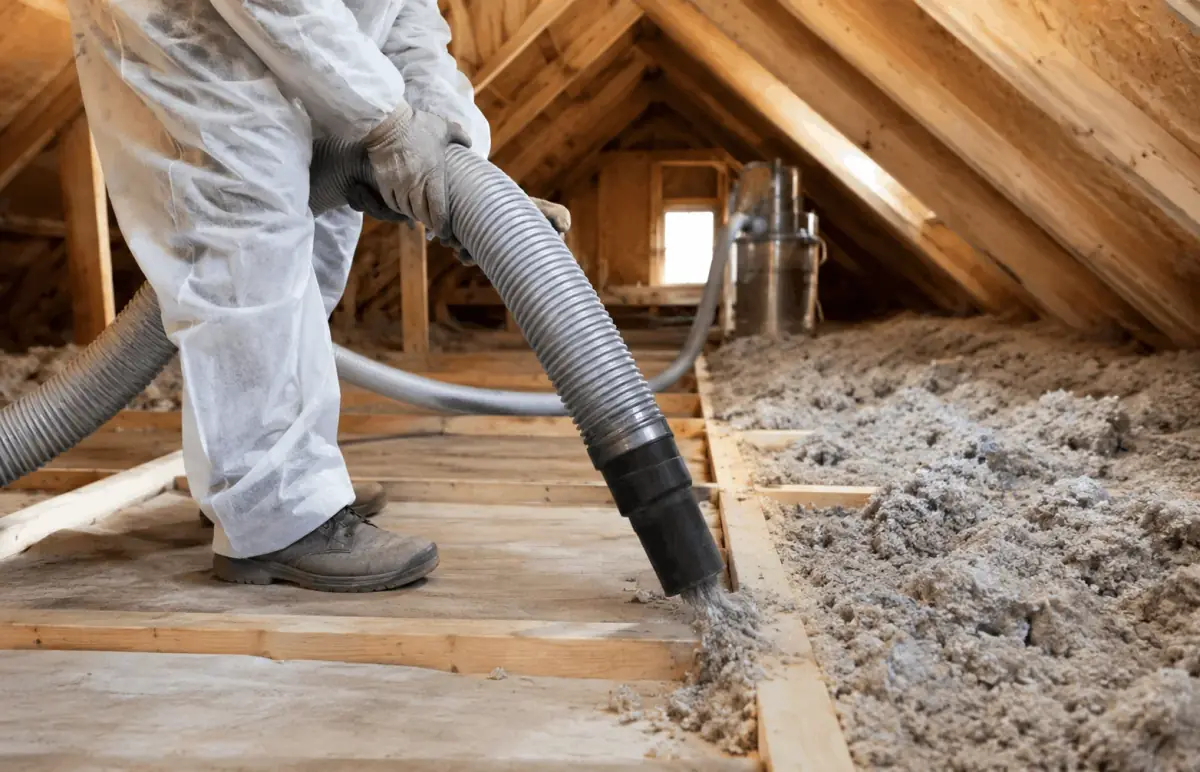
Removal gets recommended more often than it is actually needed. Insulation that is simply old, or thin, or flattened is usually a candidate for adding over the top, not for a full tear-out. What justifies emptying an attic is contamination or damage, and those are specific and identifiable things.
Quick answer: Old attic insulation only needs to come out when it is wet, contaminated by animals, smoke damaged, growing mold, or is vermiculite that may contain asbestos. Insulation that is merely thin or settled can normally be topped up instead, which costs less and takes less time.
Why most attics do not need it
Fiberglass and cellulose do not expire. Loose-fill compacts over the years and loses some of its installed depth, and depth is what carries the R-value, but the material sitting under that compacted surface is generally still doing its job. If it is dry and undisturbed, the cheaper and faster path is to blow new material over it until the total depth reaches the target.
ENERGY STAR's do-it-yourself guide to adding attic insulation treats layering as ordinary practice. It states plainly that you do not have to use the same type of insulation already in the attic, and that loose fill can go over fiberglass batts or blankets and the other way round. Nothing in it suggests stripping sound insulation out because of its age.
One caveat from the same source is worth carrying over: if fiberglass batts are laid over loose fill, they need to be unfaced, with no paper or foil backing, because a facing in the middle of an assembly traps moisture where you cannot see it.
That matters financially. Removal adds labor, disposal, and a day of work before a single inch of new insulation goes down. If it is not buying you anything, it is just cost.
The five situations that do justify removal
Water damage
Wet insulation is the clearest case. Fiberglass that has been soaked loses loft, and loft is what makes it work. Cellulose that has been rained on through a roof leak mats down and holds moisture against the ceiling below. Both can be a starting point for mold. If a roof leak has been running for a while, the affected section has to come out, and the leak has to be fixed first, or the new material ends up in the same condition.
Not every wet attic needs a complete tear-out. A leak confined to one corner usually means removing that area rather than the whole floor.
Rodents and other animals
This is the most common real trigger we see in Northwest Florida. Insulation that has been used as nesting material holds droppings and urine, and neither is something you can vacuum out or treat in place. The contamination is through the material, not on top of it. It comes out, the entry points get closed, and new material goes in.
Homeowners often notice this as a smell that gets stronger when the air handler runs, or as fine debris appearing in the living space. If you are seeing dust rather than smelling anything, the cause may be simpler than contamination, and our note on cellulose dust getting into the house covers what else it can be.
Smoke and fire damage
Smoke travels into the attic and settles into porous material, and insulation is about as porous as building material gets. Even where flames never reached, smoke-affected insulation holds odor indefinitely and reintroduces it every time the attic heats up. Removal is normally part of the restoration.
Mold growth
Mold on the insulation itself, or on the sheathing directly above it, is a removal case. It also means something is feeding it, usually a leak or a ventilation problem, and covering it over does not solve either. The U.S. Environmental Protection Agency's guidance on mold cleanup is direct about porous materials: absorbent items that have become moldy generally have to be discarded rather than cleaned, because the growth gets into spaces the cleaning cannot reach.
Vermiculite
This one is different from the rest, because the correct action is usually to do nothing yourself. Vermiculite is a loose-fill material, pebbly and grey-brown, common in homes insulated before the 1990s. A large share of what was sold came from a mine with naturally occurring asbestos contamination.
The EPA's position in its guidance on vermiculite insulation is to assume it may contain asbestos, leave it undisturbed, and not attempt to remove or disturb it yourself. Removal in that case is specialist work, not general insulation work. If you have vermiculite, the right next step is testing and a licensed abatement contractor, not a quote for a standard attic clean-out.
What removal actually involves
The work itself is unglamorous. Loose-fill is vacuumed out through a large hose into sealed bags, usually with the truck parked outside and the hose run through a window or attic access. Batts are bagged by hand. Either way the point is to get the material out without letting it circulate through the house, so the access opening gets sealed off and the crew works out of the attic rather than carrying material through living space.
Once the floor is clear, two things become possible that are difficult with insulation in the way. The first is a proper look at the deck and framing, which is when leaks and gaps get found. The second is air sealing, because the top plates, wire penetrations and can lights that leak air are visible and reachable for the only time in the project. Sealing at that moment is far more effective than sealing later.
New insulation goes in after that. If you are weighing what to put back, the difference between blown-in and batts comes down mostly to how open the space is.
What drives the cost
Removal is priced by the square foot of attic floor, and the number moves with conditions rather than with the material. What pushes it up:
- Access. A pull-down stair in a hallway is straightforward. A small ceiling hatch in a closet is not.
- Headroom. A low-pitch roof means working on hands and knees, which slows everything down.
- Depth and material. More inches means more volume to move and more bags to dispose of.
- Contamination type. Rodent contamination adds handling requirements. Suspected asbestos changes the job entirely and moves it to an abatement contractor.
- Disposal. Bagged insulation is bulky, and volume drives the haul-away.
Because removal is usually paired with reinsulating, it is worth getting both priced together rather than separately. Our overview of what insulation costs in Florida covers how the replacement side is estimated.
Questions worth asking before you agree
If someone recommends removing everything, these are reasonable things to ask, and a straight answer should be easy:
- What specifically is wrong with the existing material, and can you show me?
- Is the problem across the whole attic, or in one area?
- What is causing it, and is that being fixed as part of this?
- What would adding over the top cost instead, and why is that not the recommendation here?
- Is air sealing included while the deck is exposed?
A contamination problem has visible evidence. If the answer is vague, or the reason given is that the insulation is old, it is worth a second opinion before committing to a tear-out.
Where this leaves most homeowners
The honest summary is that a majority of the attics we look at do not need removal. They need depth, and they need the air leaks sealed. Adding to what is already there usually reaches the level a Florida attic should be at for less than starting over would cost. ENERGY STAR publishes recommended insulation R-values by climate zone, including a lower figure to add when an attic already holds a few inches, which is the situation most older homes here are in.
When removal is warranted, it is warranted for a reason you can see. If you are not sure which situation you are in, that is what an inspection is for. We will tell you if the existing material can stay, because recommending a removal that is not needed is a good way to lose a customer permanently.
If you would like someone to look, we cover Northwest Florida, South Alabama and South Georgia, and the estimate is free and in writing. You can also read more about how we handle insulation removal and insulation replacement.
Attic Insulation Removal FAQs
Do I have to remove old insulation before adding new insulation?
Usually no. ENERGY STAR's do-it-yourself guidance on adding attic insulation treats layering as normal, and states that you do not have to use the same type of insulation already in the attic, so loose fill can go over batts and the other way round. Removal is the exception, triggered by contamination or damage rather than by age alone.
How long does attic insulation removal take?
A typical single-family attic is a one-day job. Larger homes, low clearance, difficult access, or a full removal followed by air sealing and reinsulating the same day can push it into a second day. The size of the attic matters less than how easy it is to move around in.
Is removing attic insulation dangerous to do myself?
The bigger risks are not the material itself. They are working on joists with no floor, heat, and disturbing whatever is in the insulation, which is exactly what you do not want to breathe if there are rodent droppings or mold. If the attic has vermiculite, the U.S. Environmental Protection Agency advises leaving it alone and hiring a trained professional rather than disturbing it.
Will removing insulation get rid of the smell in my house?
It removes the source if the smell is coming from contaminated insulation, which is common after a rodent problem or a long-running roof leak. It will not help if the odor is coming from ductwork, wall cavities, or somewhere else in the house. That is worth identifying before paying to empty an attic.
Does insurance cover attic insulation removal?
Sometimes, when the removal follows a covered event such as storm damage or a burst pipe. It is generally not covered when the insulation has simply aged or settled. Your carrier decides that, so ask before work starts and keep the documentation from the inspection.
Not Sure Which Way to Go?
That's a reasonable place to land, and it's the question we answer for free. Send the form or call, and we'll come look at the framing and the attic before recommending anything. No obligation.
- A straight answer on which material fits, including when it's the cheap one
- We install both materials, so we have no reason to push either
- Licensed, insured & BBB A+ accredited
- Family owned in Wewahitchka, working residential homes since 1994
Request Your Free Estimate
Give us the basics on your home and we'll get in touch.