
Attic Baffles: What They Do and When an Attic Needs Them
Attic baffles are the channels set between the rafters at the eaves before insulation goes down. They keep the soffit vents open once the attic floor is brought to full depth.
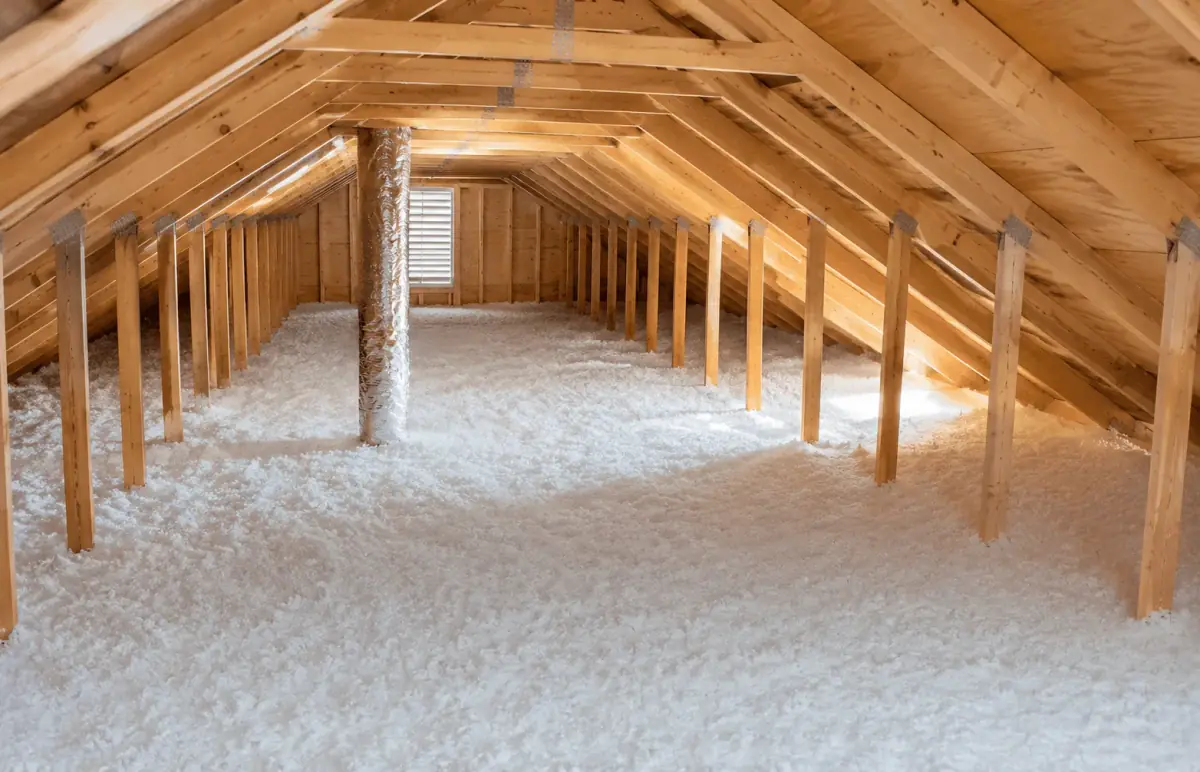
If an attic is about to get more insulation, the eaves are where the new depth meets the roof, and that is where baffles come in.
Quick answer: attic baffles, also called rafter vents, hold a channel open between the roof deck and the insulation at the eaves, so the soffit vents stay clear. They go in each rafter bay with a soffit vent behind it, before the insulation does.
What attic baffles do
In a vented attic, outside air comes in through the soffit vents under the eaves. The eaves are also where the attic floor meets the slope of the roof, so the space between the top of the insulation and the roof deck is at its smallest there.
ENERGY STAR's guide to installing rafter vents describes their job this way: rafter vents make sure the soffit vents are clear and that there is a channel for outside air to move into the attic. The same agency's sealing guide says never to cover soffit vents with insulation. A baffle is how both of those hold true once the attic floor is at full depth, which is why we set them on a blown-in insulation job.
Where attic baffles go
ENERGY STAR places rafter vents in the attic ceiling between the rafters, at the point where the attic ceiling meets the attic floor, and says to staple them directly to the roof decking.
| Detail | What ENERGY STAR's guide says |
|---|---|
| Length | 4-foot lengths |
| Widths | 14-1/2 and 22-1/2 inches, for different rafter spacings |
| With blown insulation | An additional block may be needed to keep insulation from being blown into the soffit |
The rule our crews work to is simple: baffles go in wherever insulation could otherwise block a soffit vent. Our attic insulation page covers the rest of the attic work.
Which rafter bays need attic baffles
| What the bay has | Baffle? | Why |
|---|---|---|
| A soffit vent, with loose fill going down | Yes | Blown insulation may need a block to keep it out of the soffit |
| A soffit vent, with batts going down | Yes | Soffit vents are not to be covered with insulation |
| Solid soffit with no vent opening | No | There is no eave vent to keep clear |
For how much insulation goes on the floor once the baffles are set, see our guide to how much insulation a Florida attic needs.
Why attic baffles matter with blown-in insulation
Batts are laid by hand and stay where they are put. Loose fill is blown in a stream from a hose. ENERGY STAR's rafter vent guide notes that blown insulation may require an additional block to keep it from being blown into the soffit.
ENERGY STAR's table, based on the 2021 energy code, gives R-49 for an uninsulated attic in our climate zone, and R-38 to add where 3 to 4 inches are already in place. Reaching those levels with loose fill means a layer sitting well above the joists, and that layer runs out to the eaves.
So on our jobs the baffles go in before the hose comes up. The material is then blown from the far end of the attic back toward the hatch, to a depth we mark and check as we move. Our guide to loose-fill insulation types covers the material itself.
Where baffles fit in the order of an attic job
Baffles are one step in a sequence, and the order matters. On a blown-in attic job, it runs like this:
- The gaps in the attic floor are sealed: around can lights, wiring and plumbing penetrations, top plates, and the hatch.
- Anything near a flue or a chimney gets metal flashing and fire-rated sealant.
- Baffles go in at every rafter bay with a soffit vent behind it.
- Depth markers go up around the attic, so the far corners get the same depth as the area by the hatch.
- Loose fill is blown from the far end back toward the access, and the depth is checked in several places before we leave.
The sealing comes before everything else because insulation slows heat but does not stop air moving through a gap. Our guide to attic air sealing covers that step in detail.
Baffles in an attic that already has insulation
ENERGY STAR's guide to adding attic insulation refers readers to its rafter vent instructions to see how to add insulation out to the eaves. If the existing insulation is dry, clean and pest-free, we blow the new layer straight over it, and the baffles go in at the vented bays before that new layer reaches the edge.
If what is up there is wet, matted flat or fouled, it is a different job. Our guide on when to remove attic insulation covers that case.
What our estimate states
On a blown-in attic job, the baffles at the vented bays and the sealing of the attic floor are part of the prep. Our written estimate names the material, the depth we are blowing to, and the price. Our crews work across the Florida Panhandle, South Alabama and South Georgia.
Want to know what your attic needs before the insulation goes in? We will measure the depth and look at the eaves. Get a free written estimate or call (850) 639-9272.
Attic Baffles FAQs
Do I need attic baffles in every rafter bay?
In every bay that has a soffit vent behind it, since that is where insulation could block the vent. A bay with solid soffit and no vent opening has nothing to keep clear.
What are attic baffles also called?
Rafter vents is the other common name, and it is the one ENERGY STAR uses. Both names describe the same channel at the eaves.
Do attic baffles go in before or after insulation?
Before. ENERGY STAR places them at the point where the attic ceiling meets the attic floor, stapled to the roof decking. Once the insulation is down, that spot is buried.
Do baffles matter if the attic gets batts instead of blown-in?
Yes, wherever there is a soffit vent. ENERGY STAR's sealing guide says never to cover soffit vents with insulation, and that applies whatever the type. A baffle at each vented bay keeps the vent clear whether batts or loose fill go down, and it lets the insulation run out to the edge of the ceiling.
Can baffles be added when insulation is being topped up?
Yes. ENERGY STAR's guide to adding attic insulation refers readers to its rafter vent instructions to see how to add insulation out to the eaves. On our jobs, the baffles go in at the vented bays before the new layer goes down.
What size are attic baffles?
ENERGY STAR's guide says rafter vents come in 4-foot lengths and in 14-1/2 and 22-1/2 inch widths, for different rafter spacings. The width has to suit the spacing of the rafters in your attic.
Is a baffle the same thing as a soffit vent?
No. The soffit vent is the opening under the eave. The baffle sits inside the attic between the rafters and keeps the insulation from closing that opening off, so outside air still has a channel in.
Not Sure Which Way to Go?
That's a reasonable place to land, and it's the question we answer for free. Send the form or call, and we'll come look at the framing and the attic before recommending anything. No obligation.
- A straight answer on which material fits, including when it's the cheap one
- We install both materials, so we have no reason to push either
- Licensed, insured & BBB A+ accredited
- Family owned in Wewahitchka, working residential homes since 1994
Request Your Free Estimate
Give us the basics on your home and we'll get in touch.